
Enterprise Value (EV): The True Cost of Buying a Company
Most investors look at a company’s market cap and assume that’s what the company is worth.
It’s not.
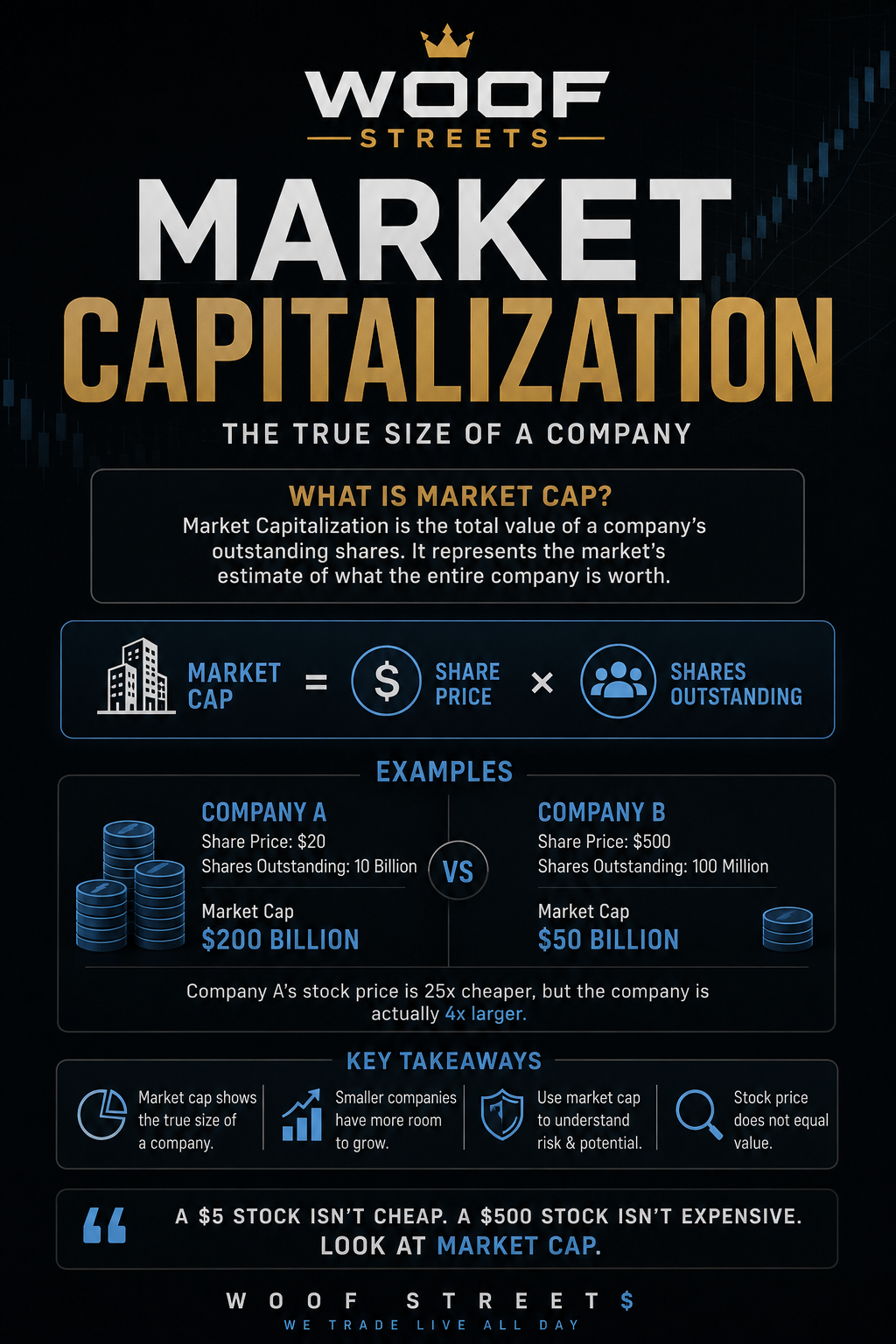
Market capitalization only tells you what the stock market values a company’s equity at. It ignores one major factor: debt. It also ignores cash sitting on the balance sheet.
That’s where Enterprise Value (EV) comes in.
Enterprise Value is what it would theoretically cost to buy the entire business.
Think of It Like Buying a House
Imagine you’re buying a house listed for $500,000.
You later discover the owner still owes $200,000 on the mortgage. If you take over that mortgage, your effective purchase price is now $700,000.
Now imagine the house also comes with $100,000 in cash sitting in a safe that becomes yours after closing.
Your true cost falls to $600,000.
Companies work the same way.
When acquiring a business, you don’t just buy the stock—you also inherit its debt. At the same time, you gain access to the company’s cash.
The Formula
Enterprise Value = Market Cap + Total Debt – Cash
It’s a simple formula, but it paints a much more complete picture of what a business is actually worth.
A Simple Example
Let’s say Company A has:
- Market Cap: $10 billion
- Debt: $4 billion
- Cash: $1 billion
Its Enterprise Value would be:
$10B + $4B – $1B = $13B
Even though headlines call it a “$10 billion company,” someone buying the entire business would effectively be paying $13 billion.
Why Investors Care
This is why experienced investors rarely stop at market cap.
Imagine two companies that both have a $10 billion market cap.
The first company has $5 billion in debt and almost no cash.
The second company has no debt and $5 billion in cash.
On paper, they’re worth the same.
In reality, they couldn’t be more different.
One has a fortress balance sheet with financial flexibility. The other carries a heavy debt load that increases risk, especially during economic slowdowns or periods of high interest rates.
Market cap doesn’t tell you that story.
Enterprise Value does.
Why EV Matters Even More in AI
This metric has become especially important in today’s AI boom.
Many companies are borrowing billions to build data centers, expand infrastructure, purchase GPUs, and secure power capacity. Looking only at market cap can make two AI companies appear similarly valued, even though one may be carrying significantly more debt to finance its growth.
That’s one reason professional investors often compare companies using EV/EBITDA instead of relying solely on the P/E ratio.
We’ll cover EV/EBITDA in a future article, but it all starts with understanding Enterprise Value.
The Bottom Line
Market cap tells you what the stock market thinks a company’s equity is worth.
Enterprise Value tells you what the entire business is worth.
If you want to compare companies like professional investors do, Enterprise Value is one of the first numbers you should look at.
It’s a small concept that can completely change how you value businesses.
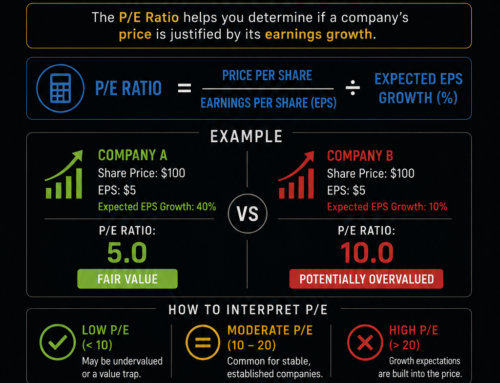
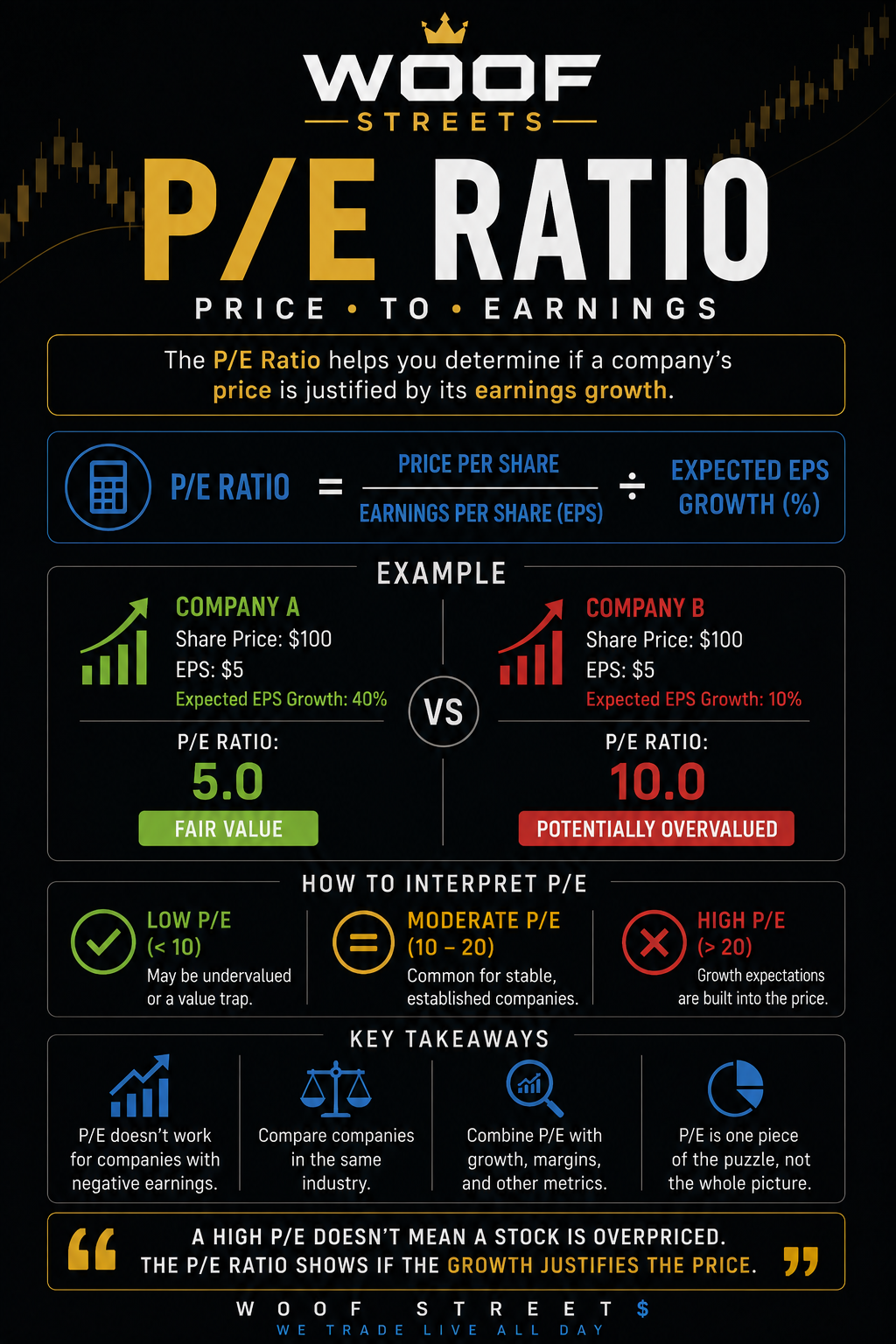
Next in Investing Basics: P/E Ratio — Why investors obsess over earnings, and why a “cheap” stock isn’t always a bargain.
Whether you’re just getting started or leveling up your game, Woof Streets is where traders learn, grow, and hunt — together.
We’re a Discord trading community built on trust, transparency, and real results.
We’re a fast-growing community of traders, analysts, and market junkies who know that the best setups don’t bark… they growl. Whether you’re here to learn or to ride the waves with a loyal crew, you’ve found your pack.